For romantic partners, family, and friendships — and how to stop intergenerational trauma from being passed down
By Jessica Anne Pressler, LCSW
Many of us hope for that one conversation where we finally say everything — and the other person finally hears it. They understand. They apologize. They make it right.
And for some, that conversation is never going to happen.
Maybe the person has died. Maybe they’ve become a stranger, or you’ve chosen distance to protect yourself. Maybe they’re still in your life, but every attempt at honesty ends with you feeling dismissed, blamed, or emotionally unsafe. It could be a parent, a sibling, a former partner, a once-close friend. The relationship is different, but the ache is the same: How do I find peace when the other person can’t — or won’t — meet me there?
Healing does not require the other person’s participation. We want their apology. We feel we need their understanding. But your peace was never meant to be dependent on someone else’s capacity to give it. You can make peace within yourself.
When the Door Is Closed
It helps to name why the repair conversation isn’t possible, because each situation carries its own kind of grief:
• They have died. Death ends the relationship as we knew it, but not the feelings. Unfinished business with someone who is gone can feel especially heavy, because there is no chance of a different ending.
• They have become a stranger. Estrangement, drifting apart, or a sudden ending can leave you with questions no one will ever answer.
• It isn’t emotionally safe. Some people respond to vulnerability with denial, blame, rage, or manipulation. Trying again and again to be heard by someone who cannot hear you often reopens the wound rather than closing it.
• They are unwilling or unable. Sometimes the person simply doesn’t have the self-awareness, maturity, or emotional tools to take responsibility.
First, Be Gentle with How You Survived
Maybe you became the peacekeeper, always smoothing things over. Maybe you learned to go quiet, to be “easy,” to need very little. Maybe you became fiercely independent so you’d never have to depend on anyone again. Maybe you numbed out, kept busy, overachieved, people-pleased, or stayed in relationships that hurt because hurt felt familiar.
Those patterns did not come from weakness. They came from wisdom — the wisdom of a younger you who was doing the best they could with what they had. Your coping mechanisms kept you going. They deserve to be understood, not shamed.
And at the very same time, there is something just as true: what helped you survive then may be what’s keeping you stuck now. You can honor the old strategy and decide it’s time for a new one. You don’t have to choose between self-compassion and change. Real change actually grows best in the soil of self-compassion.
Meet Your Traitor Within
The Traitor Within is a misguided, well-intentioned aspect of self that repeatedly leads us down self-destructive pathways. The traitor is primarily formed in childhood as adaptive responses to trauma and dysfunction, in order to feel safe, shaped by the messaging and modeling of those around the child. It originally served a protective function. These patterns persist into adulthood as an inner monologue or state of being that drives repetitive self-defeating behavior, transforming what was once survival into self-sabotage.
Notice the words well-intentioned and protective. Your Traitor Within isn’t your enemy. It’s a part of you that learned, long ago, that certain behaviors kept you safe. It may sound like:
• “Don’t make waves, or they’ll leave.”
• “If you need something, you’re too much.”
• “It was probably your fault.”
• “Don’t let anyone get close — it isn’t safe.”
When the person who hurt you isn’t available to repair things, the Traitor Within may step in to fill the silence — possibly with old, harsh messages. That’s why so much of this healing happens on the inside. You can’t make the other person change their story. But you can learn to recognize the inner voice that keeps repeating it and gently begin to answer back.
One important note: understanding the Traitor Within is never an excuse for anyone’s harmful behavior toward you. It is a tool for your healing and empowerment — a way to reclaim your choices.
When the Relationship Was Toxic, Manipulative, or Abusive
For some of you reading this, the person who can’t meet you is someone who was manipulative, controlling, or abusive — a narcissistic ex, an emotionally abusive parent, a partner who twisted the truth until you doubted your own memory. If that is your story, there are some truths that deserve to be said plainly.
It wasn’t your fault.
The way they treated you was a reflection of who they are, not of who you are or what you deserved. You did not cause their cruelty, and you could not have prevented it by being quieter, kinder, more patient, or more perfect. Your Traitor Within may insist, “If I had just tried harder, it would have worked.” That voice is not the truth.
You could not love them enough to make them healthy.
So many people stay, hoping that enough love, understanding, or sacrifice will finally reach the person they believe is underneath. But love cannot heal someone who is unwilling to look at themselves. Their healing was never your job — and it was never in your power. A priest once told me, “Never fall in love with potential.” It was good advice.
Practice radical acceptance.
Radical acceptance means acknowledging reality as it is, rather than as we desperately wish it were: This is who they are. They may never change. They may never see what they did. Acceptance is not approval, and it doesn’t mean what happened was okay. It means you stop pouring your energy into a door that will not open — and turn that energy back toward yourself.
Stop waiting to hear “You were right.”
With people like this, you will likely never be able to tell them how you feel in a way they can truly hear. And they will likely never say, “You were right. I hurt you. I’m sorry.” If you wait for that validation, you may wait forever. Your truth does not need their agreement to be true. You know what happened. You can believe yourself.
My hope is that you release the hope that they will one day become the person who validates your pain — and instead become that person for yourself.
Ways to Cope, Heal, and Make Peace Within
There is no single right path. Try what feels supportive, leave what doesn’t, and come back to these as often as you need.
1. Write the Letter You’ll Never Send
Write to the person exactly as if they would read it — every hurt, every question, every “how could you,” and even every “I miss you.” Don’t edit for fairness or politeness. This letter is for you. When you’re done, you might keep it, burn it, bury it, or tear it up. Some people find it helpful to write a second letter: the response they wish they had received. Reading the words you needed to hear, even in your own handwriting, can soften something deep inside.
2. Say It Out Loud
Words spoken aloud carry a different power. Speak to an empty chair, a photograph, the ocean, a graveside, or a trusted friend or therapist who can simply witness. You are giving voice to what has been trapped. Being heard — even by yourself — matters.
3. Grieve What Was, and What Never Was
We grieve people who have died. But we also grieve relationships that are still technically “alive” but emotionally lost — and we grieve the parent, partner, or friend we needed and never had. This is sometimes called ambiguous grief, and it is real. Give yourself permission to grieve the hoped-for version of this person and relationship, the apology that never came, the years lost, the lost you, and the childhood you deserved.
4. Separate the Person from the Story You Inherited
Many of us carry the other person’s version of events as if it were fact: you were difficult, you were dramatic, you were too sensitive. Take time to write your own account. What actually happened? What did you need? What were you too young or too frightened to understand then that you can see clearly now? Your story belongs to you.
5. Catch the Traitor Within and Talk Back
When an old, painful thought shows up, pause and get curious instead of obeying it. Ask yourself:
• Whose voice is this, really?
• When did I first learn this?
• What was this belief trying to protect me from?
• What would I say to a child I love who believed this about themselves?
Then offer a new message — one that is kind and true. “I’m allowed to have needs and make boundaries.” “I can speak up and still be safe.” “That wasn’t my fault.” At first, it may feel awkward or even false. Keep practicing. New pathways take repetition.
6. Re-Parent Yourself
If the people who raised you couldn’t give you what you needed, you can begin offering it to yourself now. Comfort yourself the way a loving parent would. Rest when you’re tired. Celebrate small wins. Set limits that protect you. Speak to yourself with warmth and compassion. It is never too late to receive the care you missed — even if you are the one giving it.
7. Set Boundaries — Outside and Inside
Healing without the other person sometimes means protecting yourself from them. That may look like limited contact, no contact, keeping conversations short and neutral, or deciding which topics are off the table. Boundaries are not punishment; they are protection.
There are inner boundaries, too: choosing not to replay the same painful scene for hours, not to check their social media, not to argue with them in your head night after night. You are allowed to close the door on rumination.
8. Let Your Body Help You Heal
Pain that was never spoken often lives in the body as tension, exhaustion, or anxiety. Gentle movement, walking in nature, deep, slow breathing, time near water, stretching, or simply placing a hand on your heart can help your nervous system feel safe enough to let go. Healing isn’t only something we think our way through; it’s something we feel our way through.
9. Create a Ritual of Release
Rituals give our hearts a way to mark change. Light a candle on a meaningful date. Release a written intention into the waves. Plant something to symbolize a new beginning. Create a small ceremony to honor a loved one who has died, or to formally lay down a burden you’re no longer willing to carry.
10. Redefine Forgiveness — or Set It Aside
Forgiveness is often presented as the only route to peace. It isn’t. For some people, forgiveness becomes a meaningful part of healing. For others, especially after abuse, the pressure to forgive can feel like another way of being silenced. Peace can come from acceptance, understanding, release, or simply deciding that this person no longer gets to occupy so much space in your mind. You get to decide what peace looks like for you.
11. Don’t Heal Alone
You may need to heal without a particular person, but you don’t have to heal by yourself. A therapist, a support group, a faith community, or a few safe friends can offer the witnessing, validation, and steady presence you may have missed. Being truly seen by safe people is one of the most powerful repairs there is.
Intergenerational Trauma: Where It Comes from and How It Stops
Intergenerational trauma is pain that gets passed down — not usually on purpose, but through what families teach, model, and leave unspoken. A grandmother who lived through hardship learns to shut down her feelings to survive. Her daughter grows up with a mother who seems distant and learns that emotions aren’t welcome. That daughter becomes a parent who struggles to comfort her own child’s tears, not because she doesn’t love them, but because no one ever showed her how.
Notice how closely this mirrors the Traitor Within. The same messaging and modeling that shapes a child’s inner protector is often the very thing that carries pain from one generation to the next. Families pass down beliefs such as:
• “We don’t talk about things.”
• “Love has to be earned.”
• “Anger is dangerous.”
• “Don’t trust anyone outside the family.”
• “Your needs come last.”
These patterns can feel like “just the way we are.” They’re not. They are learned — which means they can be unlearned.
You Can Break the Cycle Without Anyone’s Permission
Here is something that surprises many people: the person who breaks an intergenerational pattern rarely does it with the full support of their family. Often, the older generation can’t or won’t acknowledge what happened. Sometimes they’re no longer alive. Sometimes naming the pattern makes you the “difficult one.”
You don’t need their agreement to choose differently. Cycle-breaking is often quiet, private, and done one choice at a time:
• Name it. You can’t change what you can’t see. Begin noticing the family rules and messages you absorbed.
• Feel it instead of passing it on. Pain that isn’t processed tends to get handed down. Pain that is felt, understood, and tended to can stop with you.
• Choose one new behavior. Saying “I’m sorry” to your child. Talking about feelings at the dinner table. Asking for help. Letting yourself rest. Small changes create new family blueprints.
• Repair when you slip. You will repeat old patterns sometimes — everyone does. What changes the next generation isn’t perfection; it’s repair. When you return and say, “I didn’t handle that well, and I’m sorry,” you teach your children that relationships can survive mistakes.
• Tell a new story. Let your children, nieces, nephews, students, or the young people around you know that feelings are welcome, mistakes are forgivable, and they are loved as they are.
It Is Never Too Late
Whether you are 25, 55 or 85, the work still matters. Grown children can still benefit when a parent changes. Grandchildren can still feel the difference. Friends, partners, and communities notice too. And even if no one else ever sees it, you will — and you are worth the effort.
Cassandra’s Story: Making Peace with What She Was Taught
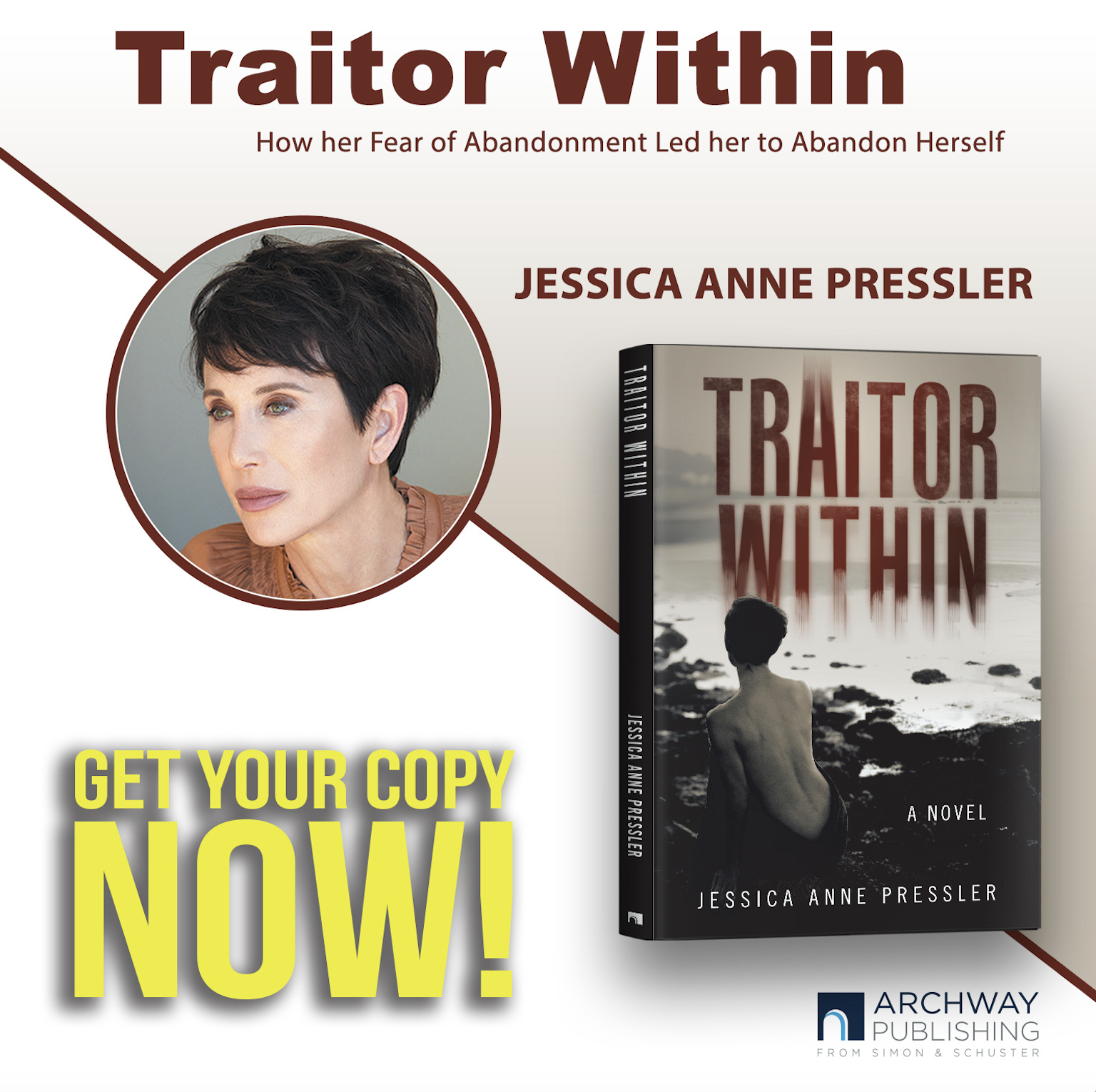
When I wrote my novel, Traitor Within, I wanted readers to see these patterns come alive in a story rather than a textbook. Intergenerational trauma runs quietly through the heart of it.
Cassandra, the protagonist, learned how to be in a relationship from the women who came before her — her mother, her aunt, and her grandmother. They taught her through their words, through their messaging, and most powerfully, through their modeling. The lessons were clear, even when no one said them out loud:
• When you’re with a man, it’s up to the wife or girlfriend to fix everything.
• When he does something “wrong” — even abusive — you look the other way.
• If something goes wrong, you assume you probably caused it.
• And no matter what, you carry on.
This is how her grandmother, her aunt, and her mother lived in their relationships and taught her. And without ever deciding to, it became how Cassandra lived in hers. Those inherited messages became part of her own Traitor Within — a voice that once seemed to promise safety led her again and again to abandon herself.
The turning point comes when Cassandra realizes that she may be teaching her own children the very same lessons. They have been watching her, just as she once watched the women in her family. She decides, finally, to make changes.
Cassandra’s healing doesn’t depend on the women who taught her ever acknowledging what they passed down. It’s about making peace, within herself, with what she was taught — having compassion for herself and for them, understanding where it came from, recognizing how it once seemed to protect her, and deciding she no longer has to live by it. She begins modeling something different. Her hope is that her children will learn not from the version of her they grew up watching, but from who she is now and what she is teaching them today.
That is the heart of breaking an intergenerational cycle. It rarely begins with a family meeting or a long-awaited apology. It begins with one person deciding, this stops with me — and then living that decision, one choice at a time.
From This Moment Forward
You may never get the conversation you wished for. You may never hear the apology, the explanation, or the words “I understand.” That loss is real, and it deserves to be grieved.
But here is what is also real: you are not powerless. You can honor the younger self who coped the only way they knew how. You can recognize your Traitor Within, thank it for trying to protect you, and gently teach it a new way. You can grieve, release, set boundaries, and surround yourself with people who are safe.
And with each choice, you begin writing a new legacy — one where the pain that was handed to you doesn’t have to be handed on.
Closure isn’t something someone else gives you. It’s something you build, from the inside out, beginning right now.
Reflection Prompts
Take your time with these. There are no wrong answers.
1. What do I most wish I could say to this person? What do I most wish they would say to me?
2. What coping strategies helped me survive, and how can I thank that younger version of me?
3. What does my Traitor Within tell me when I think about this relationship? What would a kinder, truer response be?
4. What do I need to accept about who this person is — and what truth about myself can I hold onto, even if they never acknowledge it?
5. What messages or patterns were passed down in my family that I want to stop with me?
6. What is one small, new choice I can make this week to begin a different legacy?
About the Author: Jessica Anne Pressler, LCSW, is a licensed clinical social worker who has been a psychotherapist for nearly 40 years. She developed the "Traitor Within" framework to help people name and understand the repetitive self-sabotage that shows up in their adult lives. She is the host of the podcast Your Traitor Within, author of Your Traitor Within: A Year of Journaling Prompts for Healing and Empowerment, and author of her debut novel, Traitor Within — How Her Fear of Abandonment Led Her to Abandon Herself. To learn more go to jessicaannepressler@gmail.com
Disclaimer: The contents of this website — blog, video, articles, media, social media, book, and references — are ONLY for informational and entertainment purposes. It is NOT intended as a psychological service, diagnostic tool, medical treatment, personal advice, counseling, or determination of risk, and should not be used as a substitute for treatment by psychological or medical services. Please seek consultation from an appropriate healthcare provider. Call 911 if there is an emergency. Call or text 988, the National Suicide and Crisis Lifeline. Call the National Domestic Violence Hotline at 1-800-799-7233 to talk to someone 24/7 if needed.
By looking at, reading, or listening to any information on my website, social media, YouTube, or book, and by communicating with me by email or any other means, you acknowledge and agree that we do not have a professional/client relationship. Use of this site and the information associated with it is solely at the visitor's own risk.
Continue the Journey with Traitor Within
If this article resonated with you, I invite you to explore these themes further in my novel, Traitor Within: How Her Fear of Abandonment Led Her to Abandon Herself.
Through Cassandra's story, I explore how childhood trauma, fear of abandonment, and learned survival patterns can follow us into adulthood, influencing our relationships, our choices, and the way we see ourselves.
My hope is that readers will recognize pieces of their own experiences within these pages and discover that it's never too late to break unhealthy patterns, reclaim your voice, and begin healing.
Ready to start reading?
Traitor Within is available in paperback, hardcover, and eBook formats.
Purchase on Amazon | Purchase on Barnes & Noble | Read on Apple Books
With love,
Jessica Anne Pressler, LCSW
Psychotherapist & Author of Traitor Within