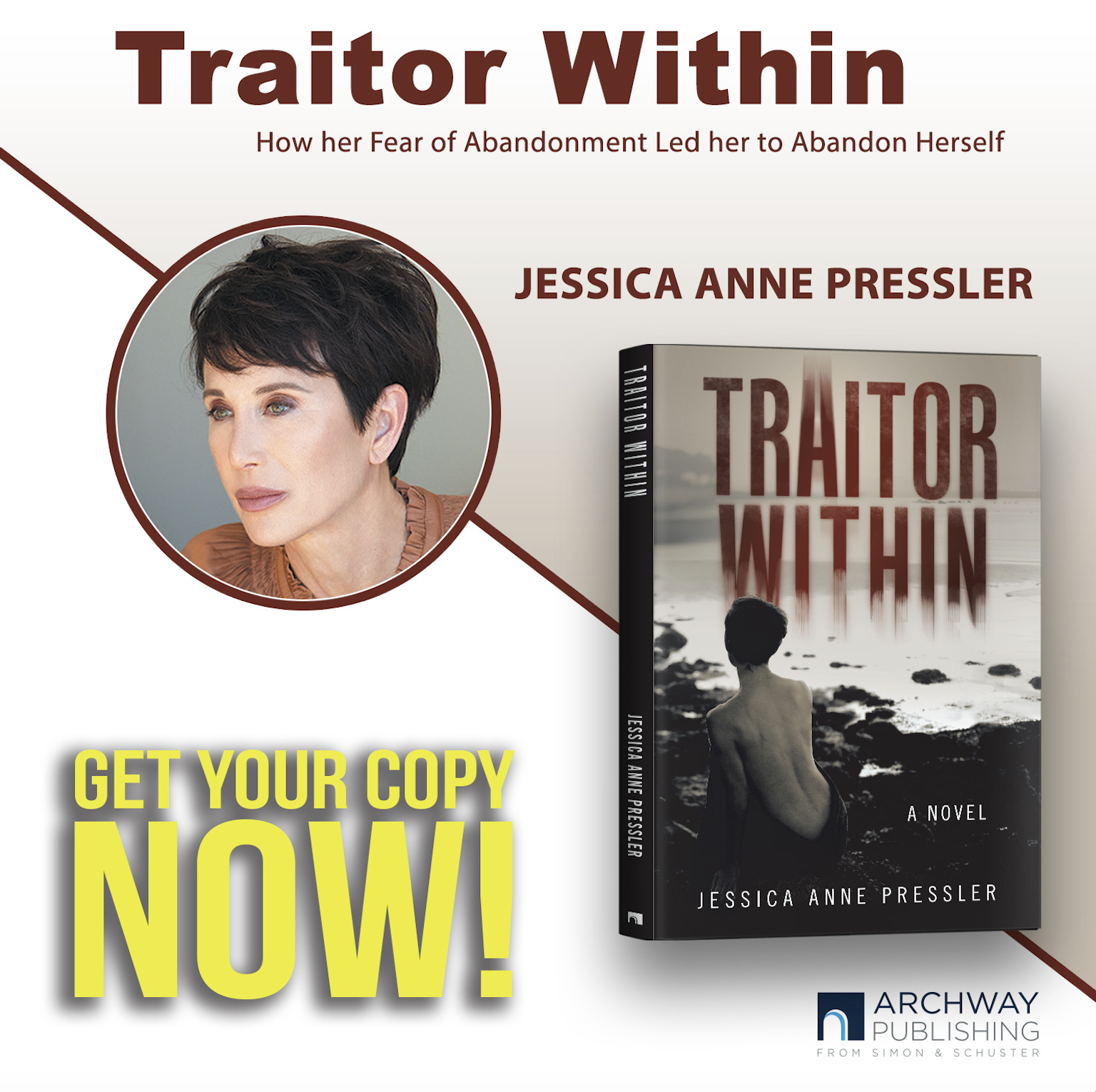
by Jessica Anne Pressler, LCSW
Some longings are so old we no longer recognize them as longings. They simply feel like who we are. We wonder why the same painful story keeps finding us, even after we promised ourselves that this time would be different.
For many of us, that story began long before we ever fell in love. It began with the very first person we ever loved.
A Note on the Word “Mother”
Although I use the word “mother” throughout this piece, please read it in whatever way fits your own life. For some of us, the wound began with a father. For others, it was a grandparent, a stepparent, an adoptive or foster parent, or whoever was there, or was meant to be there, in our earliest years. What matters most isn’t the title of the person who raised us. It’s the relationship.
You may find it more fitting to think of this as a parent wound, or a caregiver wound. And although I often speak of daughters here, sons and children of every gender can carry this wound too. Wherever you see the word “mother,” you are welcome to place the name of the person whose love you were waiting for.
What Is the Mother Wound?
The mother wound is the emotional injury that can form when a child doesn’t receive the consistent warmth, attention, and attunement she needs from her primary caregiver. It isn’t a diagnosis, and it isn’t a verdict on anyone. It is simply a way of naming a longing many of us carry quietly for years: the ache of wanting to be seen, held, chosen, and delighted in by the first person we ever loved.
Why does that first relationship matter so much? Because it is where we first learn what love is. Long before we have words, we are learning from the way we are held, answered, soothed, or left to wait. We learn whether our needs are welcome or a burden. Whether our feelings are safe to show. Whether we are worth someone’s time. These early lessons become a kind of blueprint, an inner map of how love works, and we carry that map into every relationship that follows, including the one we have with ourselves.
A mother wound can take many shapes. It may grow from:
• A caregiver who was physically present but emotionally unavailable
• Warmth that came and went, so a child never knew which version of her parent she would get
• Love that felt conditional, offered for good grades, good behavior, or being “easy”
• A child having to care for her parent’s feelings, rather than the other way around
• Criticism, comparison, or coldness where comfort was needed
• Separation or loss through illness, death, divorce, adoption, or a parent who simply couldn’t stay
This wound doesn’t require a cruel or neglectful mother. Many mothers love their children deeply and still can’t give them what they need. Some were overwhelmed, grieving, depressed, or carrying wounds of their own. Many were raised by mothers who couldn’t give to them either. In this way, the mother wound may be passed down through generations, not by intention, but by what each woman did or didn’t have to give.
When love feels uncertain or scarce, a child adapts so she can stay connected. She may learn to need less, try harder, stay quiet, take care of everyone else, or believe that if love is missing, it must be her fault. These adaptations aren’t flaws. They are the brilliant, creative ways a young heart protects itself.
As we grow, those same adaptations can follow us into how we see ourselves and how we love. Naming the mother wound isn’t about blaming our mothers. It’s about understanding ourselves with tenderness. We can hold compassion for the mother who did what she could with what she had, and for the child who needed more. Both are true.
How the Mother Wound Shows Up in Adult Life
In How We Feel About Ourselves
• A harsh inner critic whose voice sounds strangely familiar
• A quiet belief that love must be earned, and that needing more makes us “too much”
• Feeling grateful for crumbs and calling it enough
• Constantly reading other people’s moods and adjusting ourselves to keep the peace
• Struggling to rest, to receive, or to let ourselves be cared for
In Our Adult Relationships
• Being drawn to people who are warm, then distant, then warm again
• Shrinking our needs to the bare minimum so we won’t be refused
• Over-giving, caretaking, and becoming the one who holds everything together
• Assuming we caused it when someone pulls away
• Finding steady, available people “boring,” or feeling they lack chemistry
None of this means something is wrong with us. These are echoes of what we once needed to do to feel safe and connected. They made sense then. And with gentleness, they can change now.
The Mother Wound and the Traitor Within
In my work, I describe a part of ourselves I call the Traitor Within:
“The Traitor Within is a misguided, well-intentioned aspect of self that repeatedly leads us down self-destructive pathways. The traitor is primarily formed in childhood as adaptive responses to trauma and dysfunction, in order to feel safe, shaped by the messaging and modeling of those around the child. It originally served a protective function. These patterns persist into adulthood as an inner monologue or state of being that drives repetitive self-defeating behavior, transforming what was once survival into self-sabotage.”
The mother wound is one of the clearest places we can see the traitor being born. A child who can’t get enough of her mother’s time and attention often learns two lessons:
• Need less. If I ask for very little, maybe I’ll receive something.
• It must be me. For a child, it feels safer to believe “I am the problem” than to believe “the person I depend on can’t love me the way I need.” If it’s her fault, she can fix it, and hope stays alive.
Both lessons once protected her. In adulthood, they become the traitor’s voice: Just be grateful for what you get. Don’t ask for too much. If he’s pulling away, figure out what you did wrong. The traitor isn’t the cause of anyone else’s behavior, and it is never an excuse for it. But it is the voice that keeps us in the dance and turns the blame inward.
My Story
I carry a mother wound of my own. In many ways, I carry two.
I was adopted, and I didn’t learn this until I was nine, almost ten. Somewhere out there was the woman who had given me life and then given me away.
And then there was the mother who raised me. She was an amazing person in so many ways: generous, intelligent, funny, and full of wonderful qualities. She was generous as a mother, too, certainly financially. She provided for all of my basic needs, and for that I will always be grateful. I didn’t want for anything, except love, connection, warmth, acceptance, and time. Such a small amount of time. And it was something she was unable to give me.
Even now, I feel a pang of guilt writing this, because she gave so much in other ways. But nothing in the way she treated me showed me that she loved me, until a couple of days before she died, when she said “I love you” for the first time. I hold those words with gratitude.
She was never able to say, or show, that she wanted to be with me. She didn’t believe in the work I chose to devote my life to. When I cheered in high school, she didn’t come to my football or basketball games, not even when I was captain or co-captain. Except once. She came with my father and my brother, and they watched the entire first half. Then, as my squad and I went out onto the field for the halftime show, I watched my father, my mother, and my brother walk away, right in front of me.
No matter how many times I felt the devastation of her rejection, I kept wanting her. I kept believing. I kept hoping that one day she would see me for who I truly was and love me. I wanted her to have lunch with me, or spend fifteen minutes with me on the phone, and she never could. I felt as though I was asking for so much. But I was asking for crumbs. And I would have been okay with crumbs.
What I didn’t understand for a very long time was how that longing would follow me into my romantic relationships. I found myself doing the same dance, hoping and wishing that a partner would truly want me. Even the slightest moment when it seemed they might want me was enough to keep my hope alive.
But here is what confused me. I wasn’t drawn to partners who made me feel unwanted from the start. None of my relationships began that way. They began calm, or exciting, or loving, and every one of them made me feel wanted. How could I have known where they would lead? Yet in each one, sometimes after many years, we arrived at the same place I had been with my mother. I was longing for the most minimal time and attention. And each time, I blamed myself. I was bewildered, because I hadn’t changed. I was the same person I had been when they seemed so happy to be with me. And still, I was certain I must have done something wrong.
Eventually, I came to see that I had been replaying my relationship with my mother, again and again. The longing, the waiting, the gratitude for crumbs, the self-blame. It was my mother wound, showing up in new faces.
How Did Some Part of Me Know?
The question that stayed with me the longest was this: if these relationships never began that way, how did some part of me know? How did I keep finding my way back to the same story?
Here is what I’ve come to understand:
• The body remembers what the mind can’t name. Our earliest relationships are stored below conscious awareness. We don’t need to remember the pattern for our nervous system to recognize it.
• Familiar can feel like chemistry. Early on, there may be small cues: a warmth that isn’t fully steady, attention that comes and goes. Our conscious minds miss them, but our bodies read them as home. Not safe, but familiar. And familiar is easy to mistake for love.
• Love given and taken away binds us more tightly. When affection is unpredictable, we hold on harder, waiting for the next moment of warmth. If we learned that rhythm as children, we already know the steps.
• We are hoping for a different ending. Some part of us is still trying to win the love we couldn’t win as a child. If this person stays, maybe it means we were worth staying for all along.
So we didn’t fail to see it coming. Our bodies saw it, and called it love, because that is what love first looked like to us. And that bewildering thought, “I haven’t changed, so why is this happening?” was never a sign of failure. It was the truth trying to break through the traitor’s story that it must be our fault.
Healing With Compassion
Healing the mother wound isn’t about rewriting the past or making our mothers wrong. It’s about gently loosening the traitor’s grip, one moment of awareness at a time.
• Notice the pattern without judgment. When you find yourself accepting crumbs or blaming yourself, pause and ask: Whose voice is this? How old does this feeling seem?
• Thank the part of you that adapted. The child who learned to need less was doing her very best to stay connected. She deserves gratitude, not shame.
• Make room for grief. It is okay to mourn what you didn’t receive, even while loving the person who couldn’t give it. Grief is not betrayal. It is honesty.
• Offer yourself what you longed for. Give yourself the time, attention, and gentleness you once waited for. Thirty minutes. An hour. Then more.
• Be patient with steadiness. Consistent, kind love may feel unfamiliar, even uncomfortable, at first. Unfamiliar doesn’t mean wrong. It may simply mean new.
• Hold compassion in both directions. For your mother, who likely gave what she could with what she had, and for yourself, who needed more and deserved more.
• You don’t have to do this alone. A therapist, a support group, or trusted friends can help you see the pattern clearly and practice something different.
If you recognize yourself in these words, please know this: the child who waited for love was never too much, and she was never asking for too much. She was asking for what every child deserves. It is not too late to begin giving it to her now.
About the Author: Jessica Anne Pressler, LCSW, is a licensed clinical social worker who has been a psychotherapist for nearly 40 years. She developed the “Traitor Within” framework to help people name and understand the repetitive self-sabotage that shows up in their adult lives. She is the host of the podcast Your Traitor Within, author of Your Traitor Within: A Year of Journaling Prompts for Healing and Empowerment, and author of her debut novel, Traitor Within — How Her Fear of Abandonment Led Her to Abandon Herself. To learn more, visit jessicaannepressler.com.
Continue the Journey with Traitor Within
If this article resonated with you, I invite you to explore these themes further in my novel, Traitor Within: How Her Fear of Abandonment Led Her to Abandon Herself.
Through Cassandra's story, I explore how childhood trauma, fear of abandonment, and learned survival patterns can follow us into adulthood, influencing our relationships, our choices, and the way we see ourselves.
My hope is that readers will recognize pieces of their own experiences within these pages and discover that it's never too late to break unhealthy patterns, reclaim your voice, and begin healing.
Ready to start reading?
Traitor Within is available in paperback, hardcover, and eBook formats.
Purchase on Amazon | Purchase on Barnes & Noble | Read on Apple Books
With love,
Jessica Anne Pressler, LCSW
Psychotherapist & Author of Traitor Within
Disclaimer: The contents of this website — blog, video, articles, media, social media, book, and references — are ONLY for informational and entertainment purposes. It is NOT intended as a psychological service, diagnostic tool, medical treatment, personal advice, counseling, or determination of risk, and should not be used as a substitute for treatment by psychological or medical services. Please seek consultation from an appropriate healthcare provider. Call 911 if there is an emergency. Call or text 988, the National Suicide and Crisis Lifeline. Call the National Domestic Violence Hotline at 1-800-799-7233 to talk to someone 24/7 if needed.
By looking at, reading, or listening to any information on my website, social media, YouTube, or book, and by communicating with me by email or any other means, you acknowledge and agree that we do not have a professional/client relationship. Use of this site and the information associated with it is solely at the visitor's own risk.